9 minutes
[Press Freedom Index - SLOVAKIA]: Public media and regulator pressured
World Press Freedom (3 May). Infographics: RSF
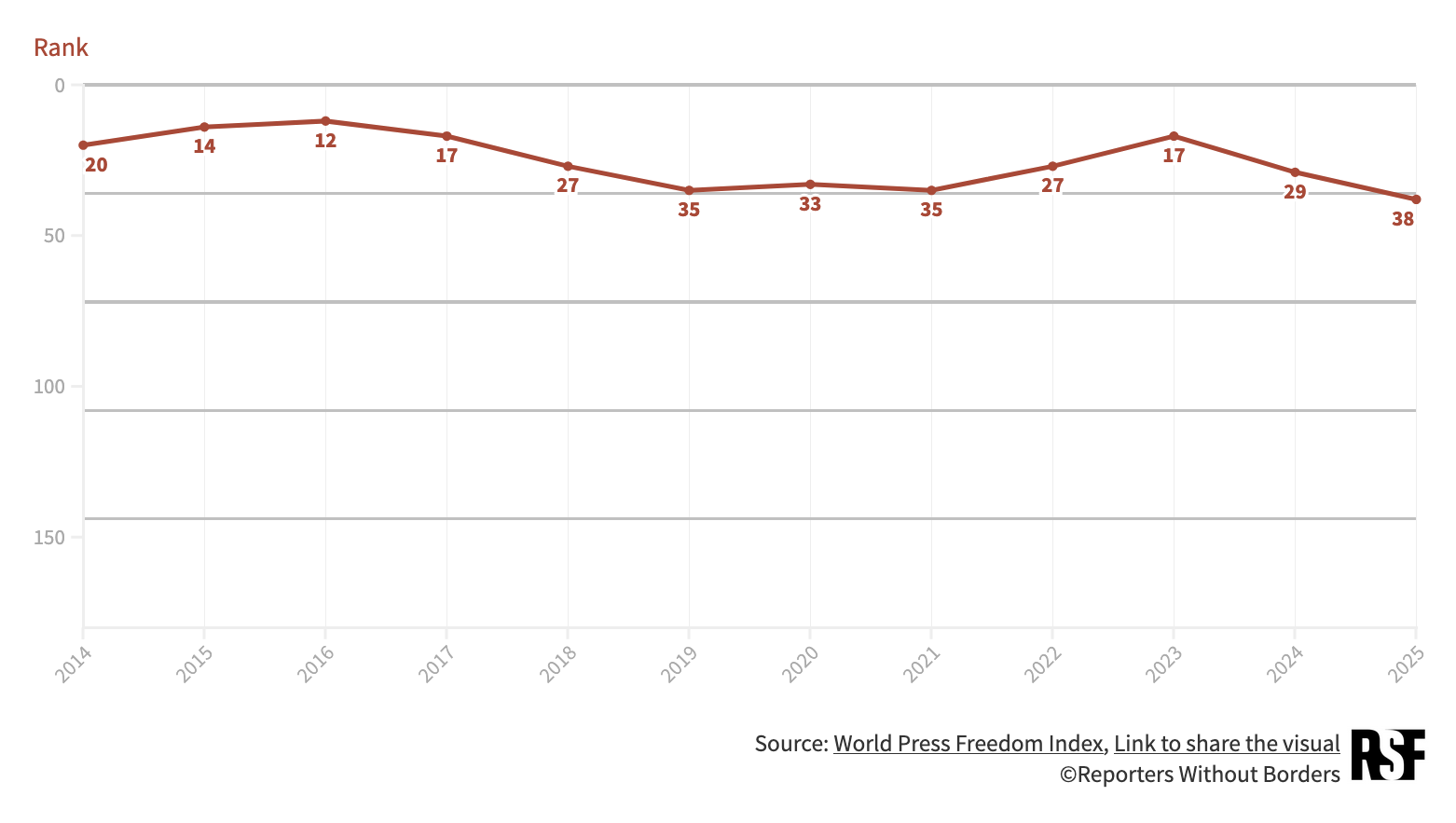
RSF in its 2026 Index ranked Slovakia as 37th (similarly to 38th in 2025). However, the trend is alarming. Since the 2023 parliamentary elections Slovakia's ranking fell from #17 (in 2024 to #29 and in 2025 to #38). The Robert Fico's government has been deliberately creating a hostile environment for independent media and critical journalists, while public broadcaster (STVR) is captured by the state. Moreover, the 2018 murder of investigative journalist Ján Kuciak and his fiancée remains unsolved.
#WORLD PRESS FREEDOM INDEX 2026
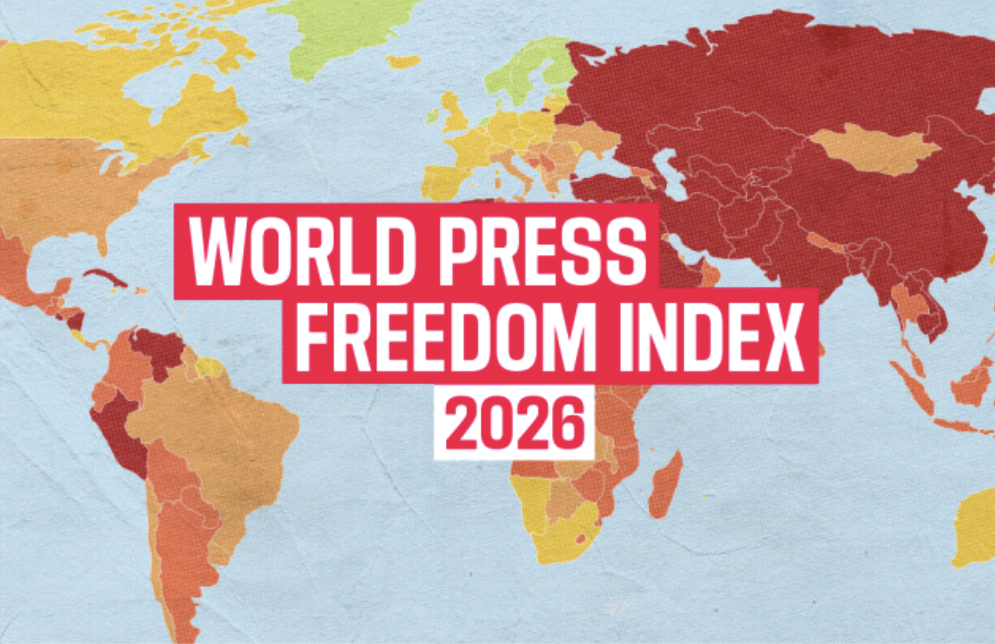
Reporters Without Borders (RSF), at the occasion of the World Press Freedom Day, issued its annual assessment of the world media freedom - World Press Freedom Index 2026.
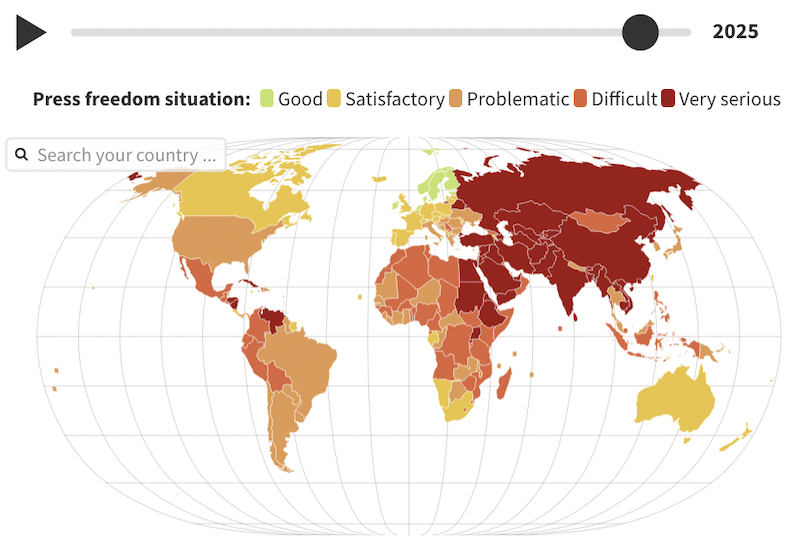
In 2025 the RSF stated that"for over ten years, the Index’s results have warned of a worldwide decline in press freedom. More than six out of ten countries (112 in total, out of 180 in total) saw their overall scores decline in the Index". The 2025 Index found that more than half of the world's population lived in a country where press freedom is in a “very serious” situation — it was 4.25 billion people in 42 countries marked bright red on the map.
In the current 2026 edition, for the first time in the history of the World Press Freedom Index, over half of the world’s countries now fall into the “difficult” or “very serious” categories for press freedom (52.2%). In 25 years, the average score of all 180 countries and territories surveyed in the Index has never been so low. Since 2001, the expansion of increasingly restrictive legal arsenals — particularly those linked to national security policies — has been steadily eroding the right to information, even in democratic countries. The Index’s legal indicator has declined the most over the past year, a clear sign that journalism is increasingly criminalised worldwide.

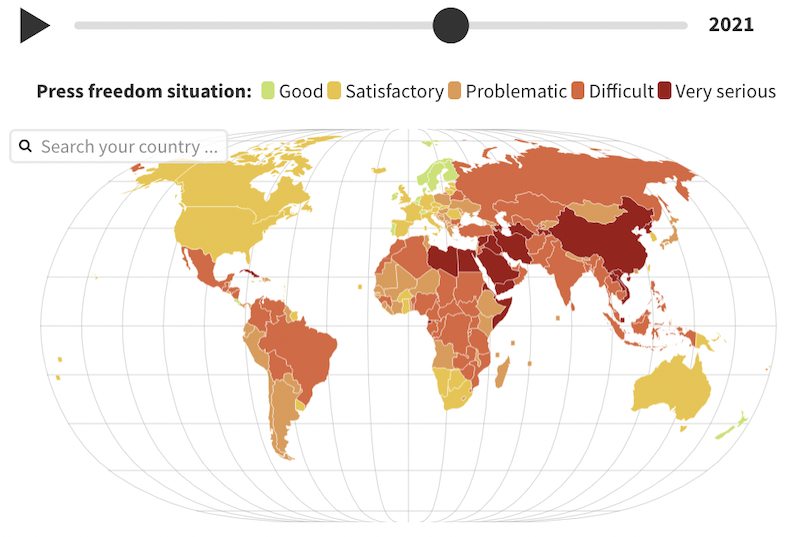
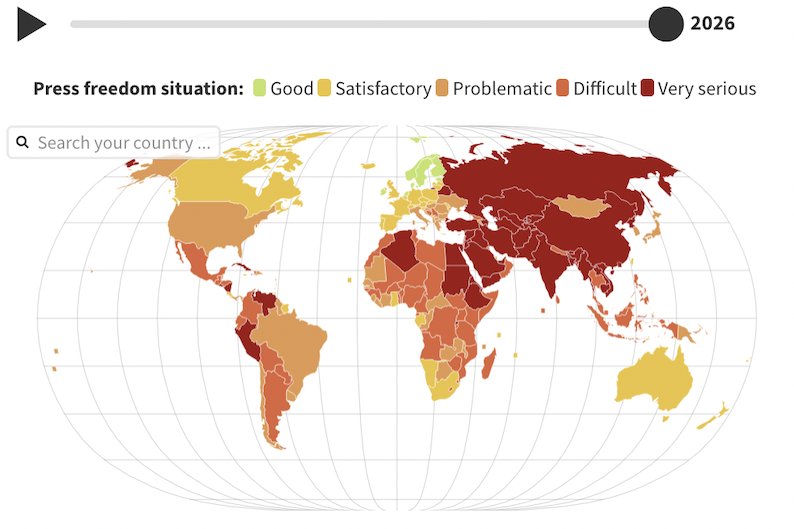
Main findings with a foreword of Anne Bocandé, RSF Editorial Director, are available here as well as in a short video introduced by Clayton Weimers, Executive Director, RSF North Armerica. Here is the methodology of the 2026 World Press Freedom Index.

#Five key takeaways from the 2026 World Press Freedom Index:
The average score has never been so low. For the first time in the Index’s 25-year history, more than half the world’s countries now fall into the “difficult” or “very serious” categories for press freedom.
Out of the five indicators used to assess press freedom worldwide — which determine the economic, legal, security, political and social environments for journalism — the legal indicator has seen the sharpest decline.
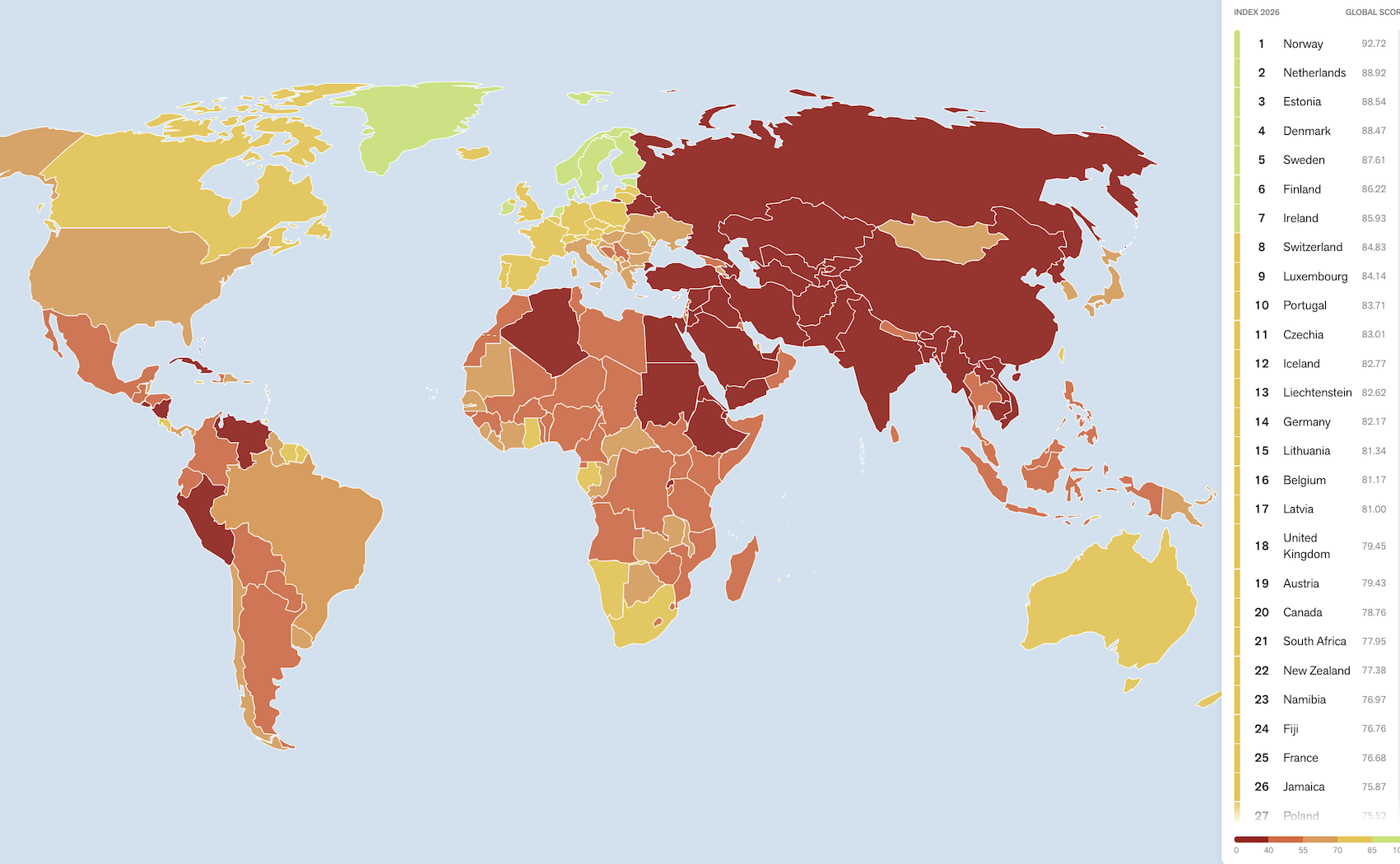
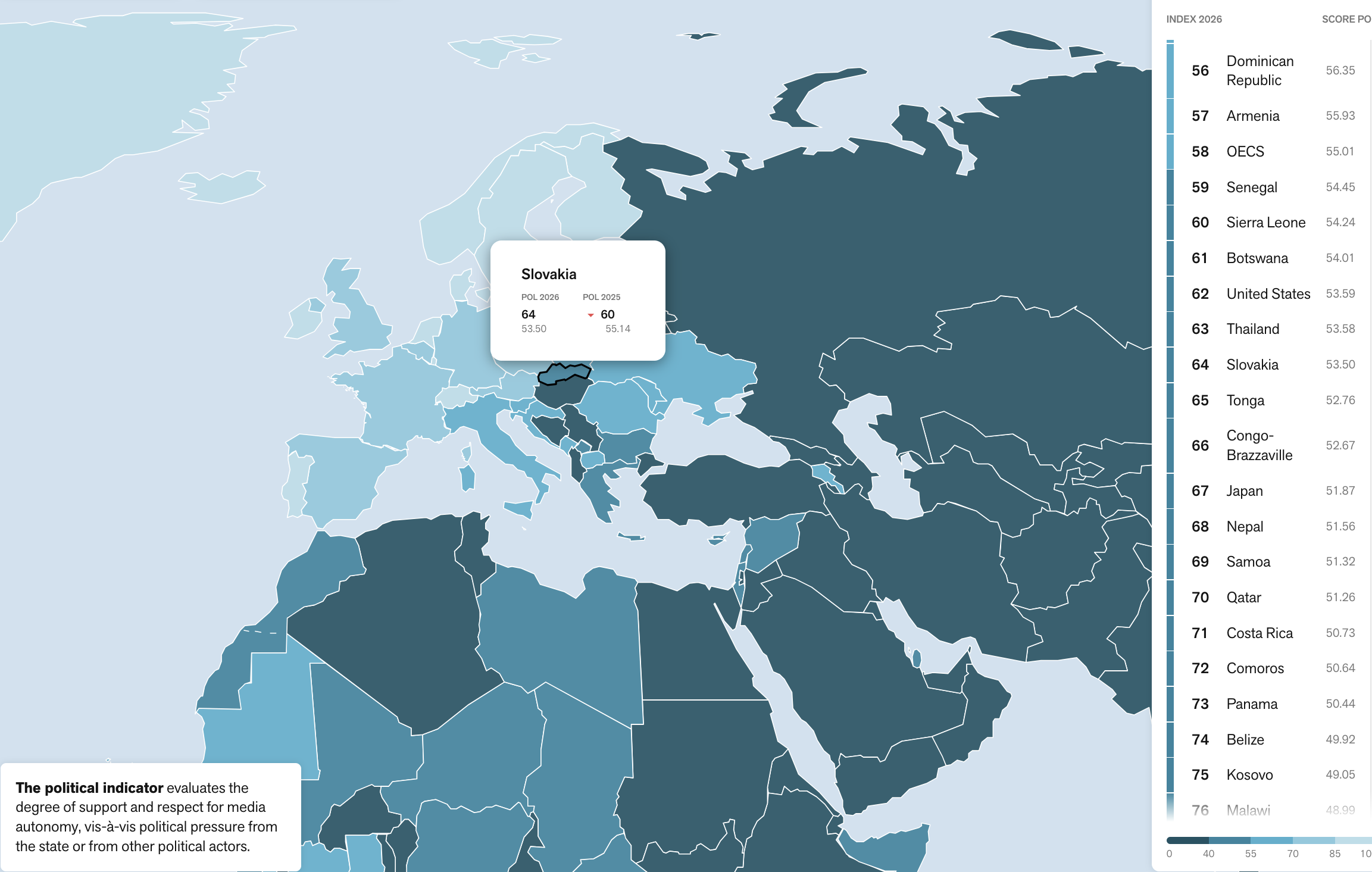
The United States has fallen seven places (to its historical low, 64th) and other countries in the Americas, such as Ecuador and Peru, have plummeted in the ranking.
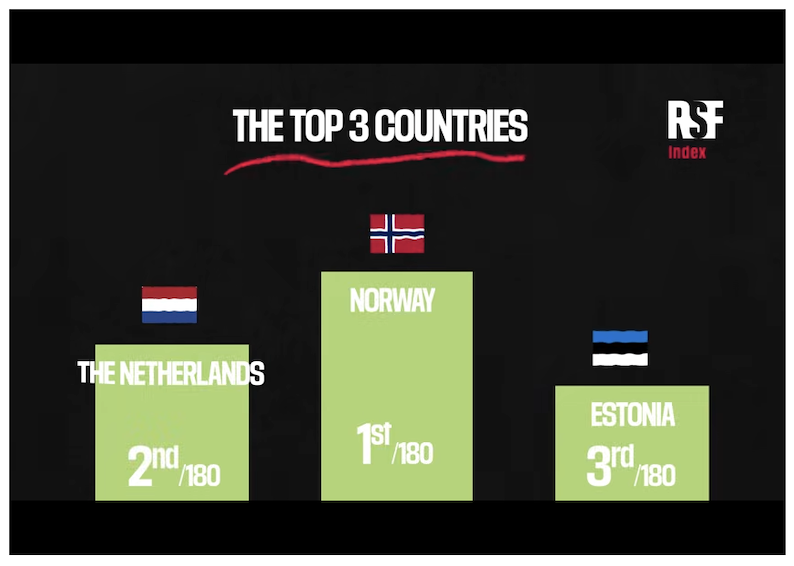
Norway holds the top spot for the tenth consecutive year, while Eritrea comes in last for the third year in a row.
Post-Assad Syria has seen the biggest improvement in press freedom of all the countries and territories in the 2026 Index, climbing 36 places in the ranking.
#For the first time in a quarter of a century:
The overall average score of all the countries assessed has never been so low.
In over half of the world’s countries and territories (52.2%), the state of press freedom is categorised as “difficult” or “very serious.” This category was a small minority (13.7%) in 2002.
In 2002, 20% of the global population lived in a country where the state of press freedom was categorised as “good.” Twenty-five years later, less than 1% of the world’s population lives in a country that falls under this category.

#The criminalisation of journalism reaches a peak
The Index’s legal indicator has seen the most severe decline this year. This score deteriorated in more than 60% of states — 110 out of 180 — between 2025 and 2026. This is notably the case in India (157th), Egypt (169th), Israel (116th) and Georgia (135th). The criminalisation of journalism, which is rooted in circumventing press law and misusing emergency legislation and common law, is proving to be a global phenomenon.
#Pressure on public media
Public policies have failed to provide a structural solution to the array of challenges — be they physical or legal threats — faced by journalists around the world. In more than 80% of the countries analysed, protection mechanisms are seen as non-existent or ineffective. Although the European Media Freedom Act (EMFA) guarantees the independence and sustainability of media outlets — particularly public service outlets — within the European Union, it is regularly undermined by national legislative projects, as was the case in Hungary (74th) under Viktor Orbán’s outgoing government, and also in better-ranked countries such as Slovakia (37th), Lithuania (15th) and the Czech Republic (11th).
#Country file: SLOVAKIA
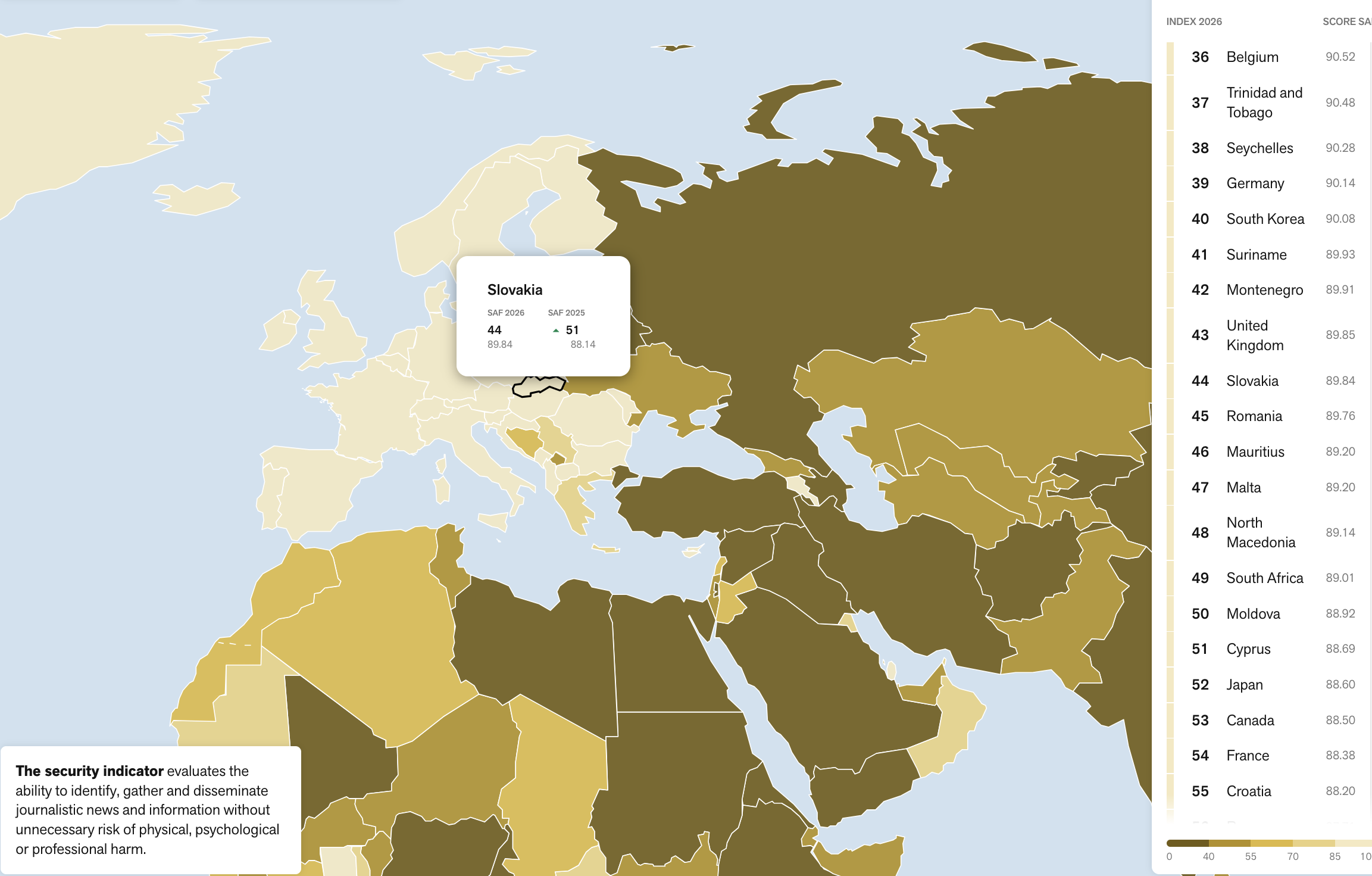
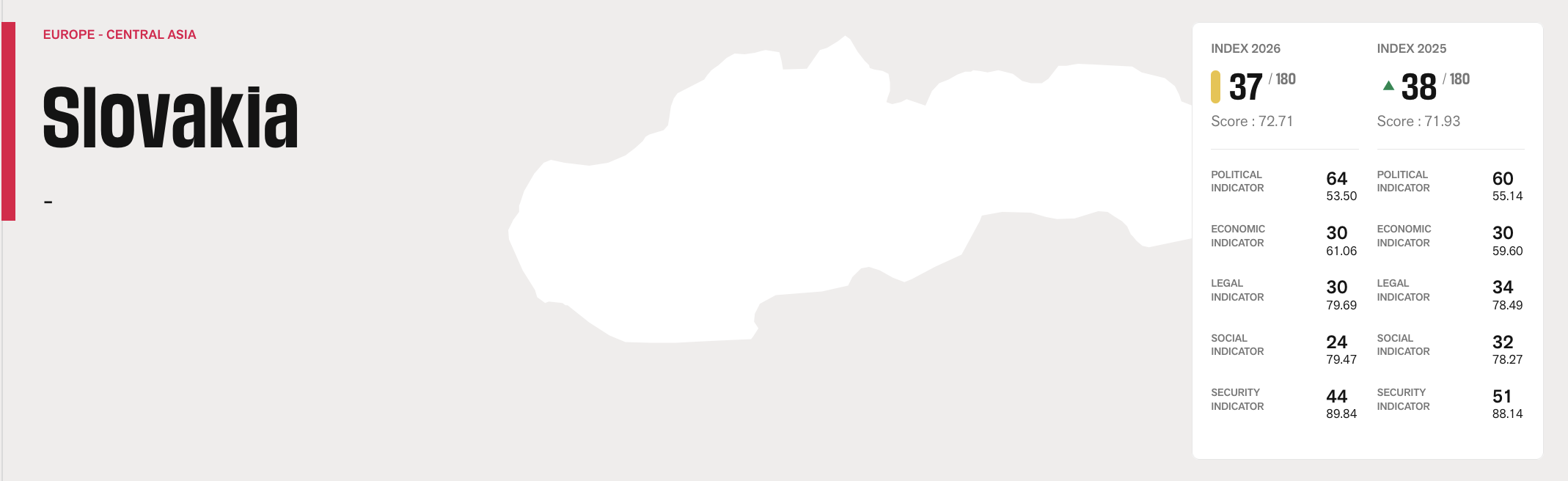
Slovakia ranked 37th out of 180 countries, a one-place improvement in comparison with 2025. Slovakia’s score improved marginally, on a scale of 0 to 100, Slovakia improved by 0.8 points to a total score of 72.7 (0-100).
As Pavol Szalai, RSF Prague Bureau Director, explained for a Slovak media (Aktuality, SME, TA3) "since 2023, the country has lost a total of 20 places, pointing to a longer-term negative trend since the start of Robert Fico’s fourth government". Among the indicators of press freedom in Slovakia, the political context saw the sharpest decline, falling by 1.6 points - from 60th to 64th place. The RSF report attributes this to pressure on public service media and media regulatory bodies.

Although Prime Minister Robert Fico’s government deliberately creates a hostile political environment for journalists, press freedom has been underpinned by the legal framework and the media’s economic sustainability. The instigator of the 2018 murder of Jan Kuciak and his partner has yet to be convicted.
#Media landscape
The most influential privately-owned media outlet, TV Markíza, is subject to political pressure and several experienced reporters have left the newsroom to start a new media. Public broadcaster RTVS has been replaced with a new entity, STVR, which gave the government the opportunity to interfere with the outlet's management and independence. After acquiring the newspaper Novy cas, the oligarchic Penta group now owns Slovakia’s two biggest tabloid newspapers. Despite these challenges, the country has a strong tradition of investigative journalism, which appears in several newspapers and online media outlets.
#Political context
Since the 2023 parliamentary elections brought back Prime Minister Robert Fico — a press freedom predator who was in power when journalist Jan Kuciak was murdered — the government has been deliberately creating a hostile environment for journalism. The ruling coalition’s representatives attack critical media, refuse to answer their questions and threaten the independence of the media authority.
#Legal framework
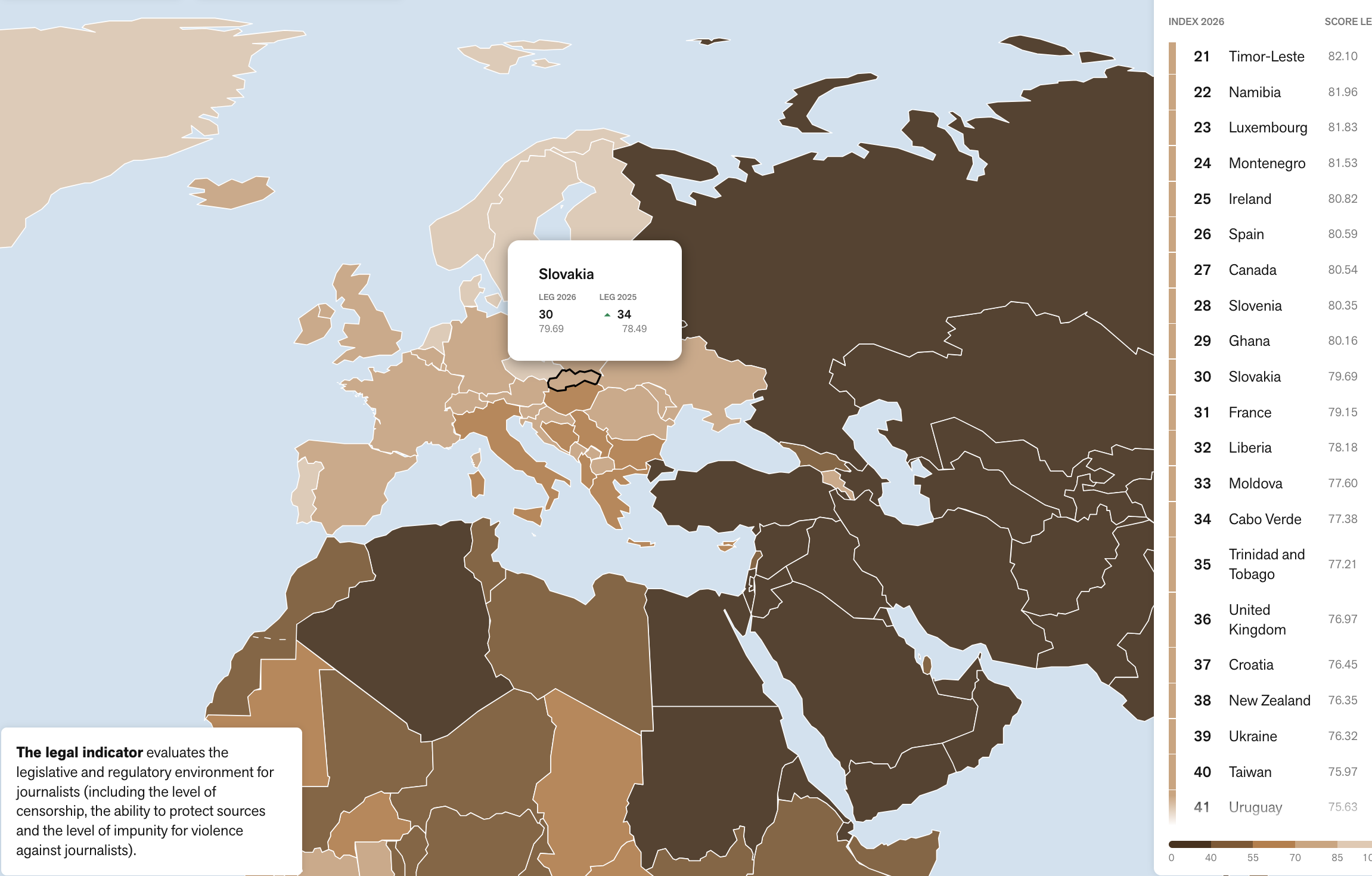
The country’s legal framework is favourable towards press freedom when it comes to the confidentiality of journalistic sources and transparency of media ownership and funding. Additionally, the courts have recently made several decisions that uphold press freedom, the right to information and whistleblowing. However, defamation is still punishable by imprisonment and representatives of the ruling coalition have been filing abusive lawsuits (SLAPPs) against the press. Moreover, the STVR law is incompatible with the European Media Freedom Act (EMFA).
#Economic context
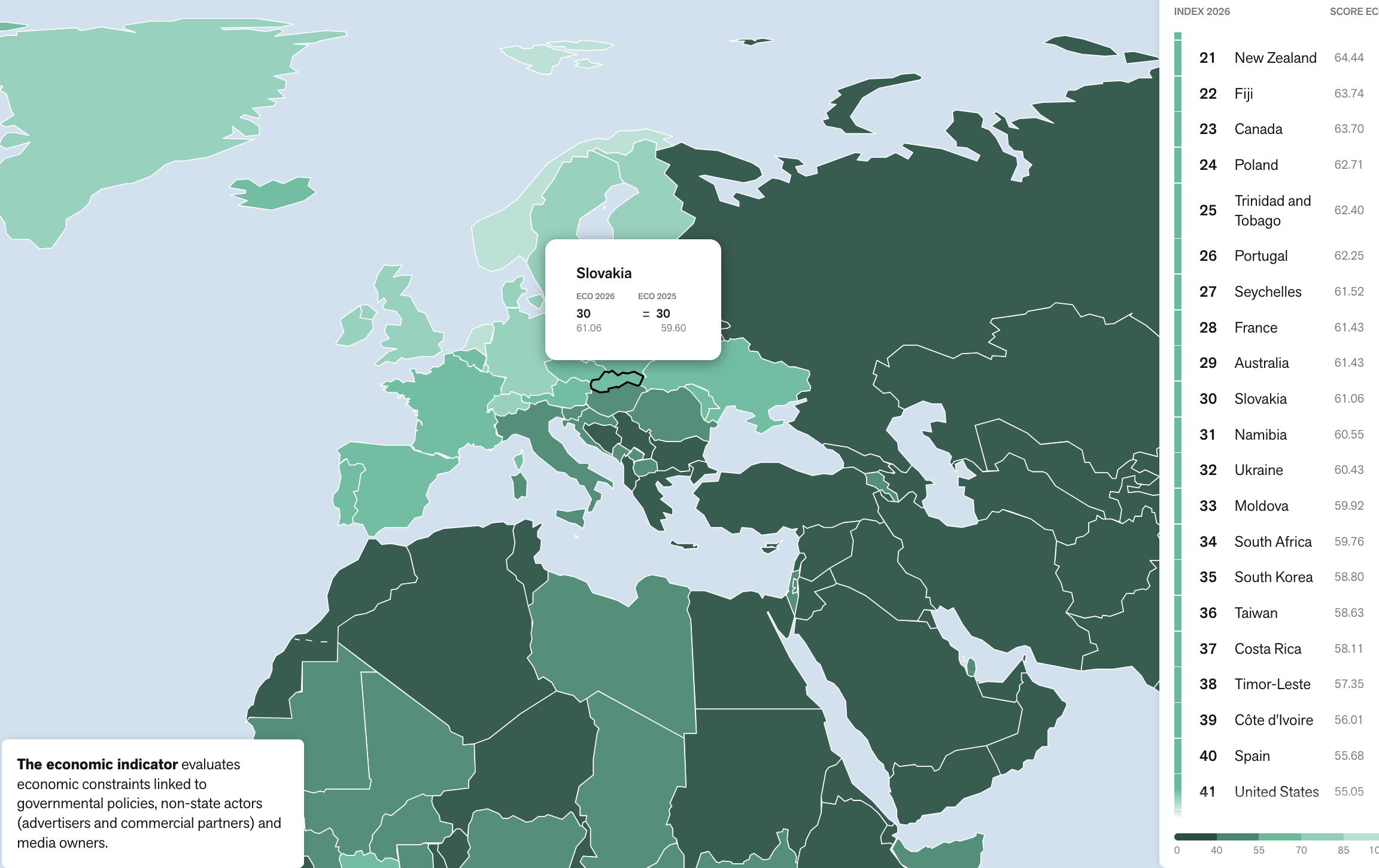
Various factors undermine the mainstream media’s editorial independence. A small group of oligarchs owns several major outlets while the public broadcaster STVR’s funding remains vulnerable to political influence. A number of smaller privately owned media outlets are growing and expanding into foreign markets thanks to the support of their audience and the digital subscription model. Nonetheless, the limited size of this market and the rise of digital platforms hamper the funding of quality news reporting.
#Socio-cultural context
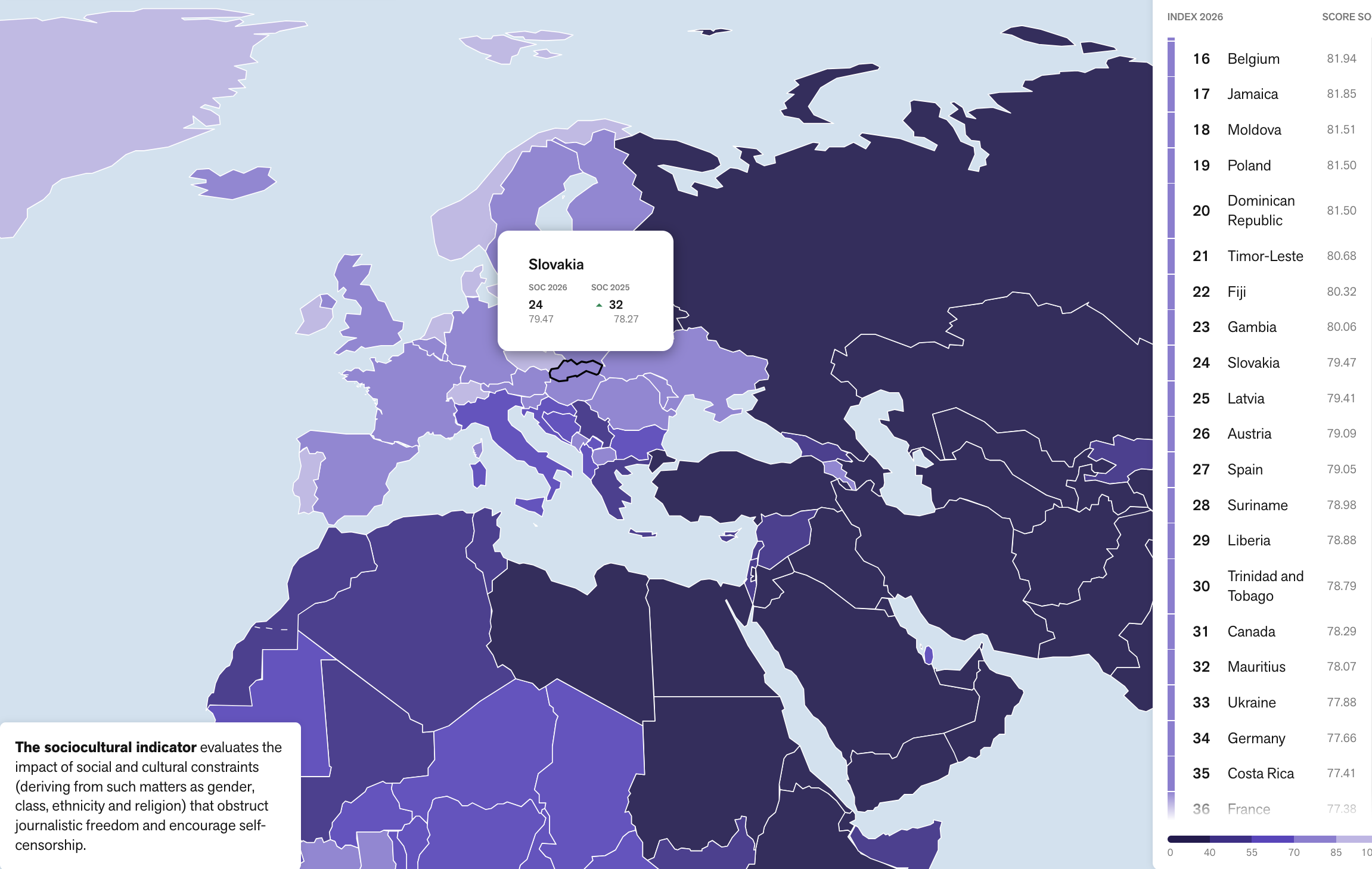
While Slovak society is largely conservative, the country’s media outlets are, for the most part, liberal-leaning, which causes tension. Generally, the media does not enjoy a high level of credibility among the public. Encouraged by the verbal attacks of some politicians, members of the public have insulted, threatened and harassed journalists, especially women. Police investigations into these attacks have yielded mixed results.
#Safety
The murder of investigative reporter Jan Kuciak and his fiancée Martina Kusnirova in 2018 was a tragic turning point. Although two of the perpetrators and two intermediaries have been convicted, the alleged instigator, businessman Marian Kocner, was acquitted twice. In 2023, two new press freedom platforms were launched with RSF support, one by civil society and the other by the state, but their work has been undermined by Fico’s government.